

Nakshatra (Constellations) in Vedic Astrology
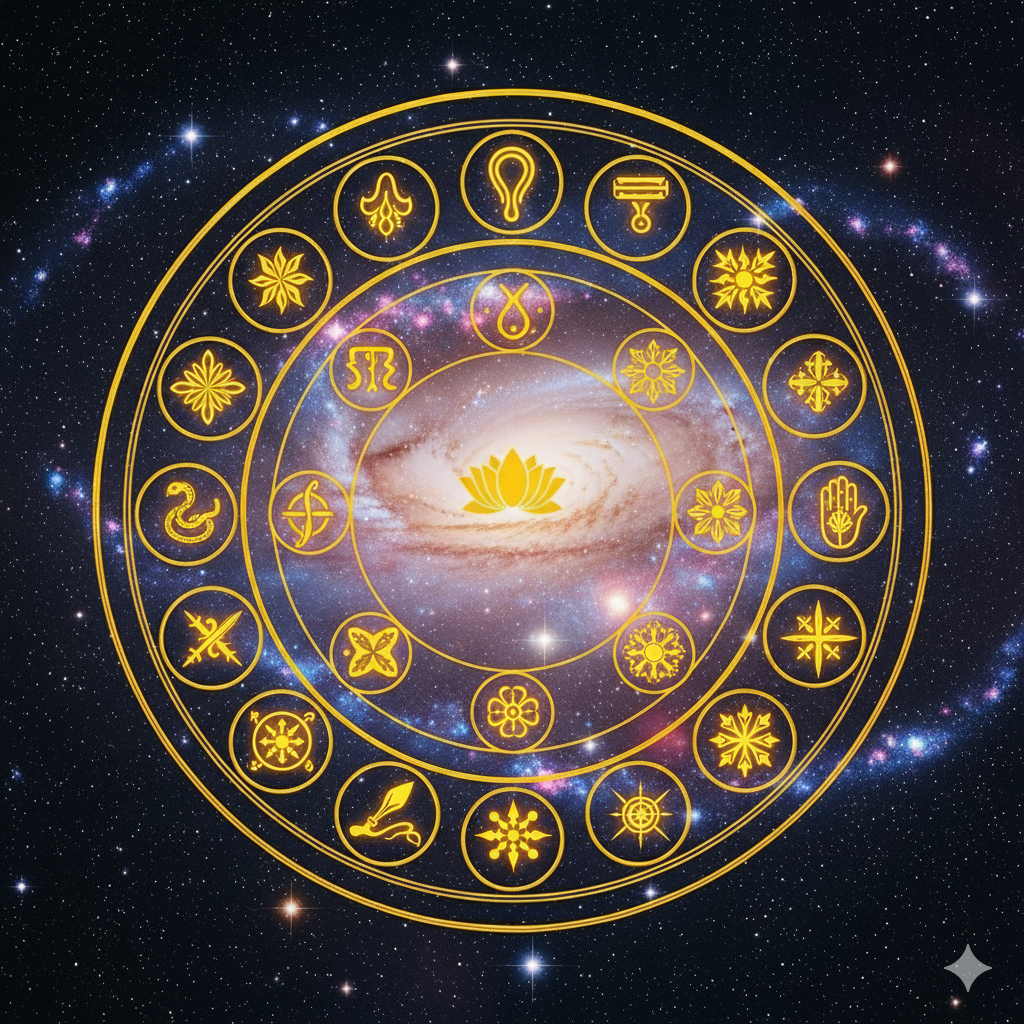
The Nakshatra system is one of the most ancient and distinctive features of Vedic astrology. The Moon's path across the sky is divided into 27 lunar mansions (sometimes 28, with Abhijit included), each spanning exactly 13°20' of the ecliptic.
While Western astrology tracks the Sun's journey through the zodiac, Jyotisha places enormous emphasis on the Moon — and by extension, the Nakshatra it occupies at the moment of birth. This reflects the Vedic understanding that the Moon governs the mind, emotions, and lived experience far more intimately than the Sun does.
Each Nakshatra has its own ruling deity, planetary lord, symbol, and psychological signature, making them richer and more nuanced than sun signs. For example, Ashwini (ruled by Ketu) carries an energy of swift healing and new beginnings, while Jyeshtha (ruled by Mercury) embodies power, seniority, and a certain intensity. One of the most practical applications of Nakshatras is the Vimshottari Dasha system — a 120-year planetary period cycle entirely based on the Nakshatra the Moon occupied at birth. This system is the backbone of Vedic predictive astrology, used to time life events with remarkable precision.
What makes Nakshatras particularly fascinating is how deeply they permeate Indian culture beyond astrology. Muhurtha (electional astrology — choosing auspicious times for weddings, travel, or new ventures) relies heavily on the Nakshatra of the day.
Traditionally, children were named based on the syllable assigned to their birth Nakshatra.
Baby Name Calculator
Even the word "Nakshatra" itself is evocative — it derives from Sanskrit roots meaning that which does not decay, pointing to the ancient belief that these star clusters are eternal cosmic reference points. With each Nakshatra connected to specific stars (Rohini to Aldebaran, Chitra to Spica, for instance), the system is essentially Vedic astronomy and mythology woven seamlessly together.
Each Nakshatra has its own ruling deity, planetary lord, symbol, and psychological signature, making them richer and more nuanced than sun signs. For example, Ashwini (ruled by Ketu) carries an energy of swift healing and new beginnings, while Jyeshtha (ruled by Mercury) embodies power, seniority, and a certain intensity. One of the most practical applications of Nakshatras is the Vimshottari Dasha system — a 120-year planetary period cycle entirely based on the Nakshatra the Moon occupied at birth. This system is the backbone of Vedic predictive astrology, used to time life events with remarkable precision.
What makes Nakshatras particularly fascinating is how deeply they permeate Indian culture beyond astrology. Muhurtha (electional astrology — choosing auspicious times for weddings, travel, or new ventures) relies heavily on the Nakshatra of the day.
Traditionally, children were named based on the syllable assigned to their birth Nakshatra.
Use our free Baby Name calculator to determine the starting syllable for your child.
Even the word "Nakshatra" itself is evocative — it derives from Sanskrit roots meaning that which does not decay, pointing to the ancient belief that these star clusters are eternal cosmic reference points. With each Nakshatra connected to specific stars (Rohini to Aldebaran, Chitra to Spica, for instance), the system is essentially Vedic astronomy and mythology woven seamlessly together.
| # | Nakshatra (Constellation) |
Sign English Equivalent |
Symbol | Space on the Ecliptic |
Ruling Planet |
Deity | Gana | Quality | Tatva | Yoni | Direction |
|---|---|---|---|---|---|---|---|---|---|---|---|
| 1 | Ashwini | मेष (Aries) | Horse’s head | 13 °- 20′ | Ketu | Ashwini Kumara | Deva | Laghu (Light) | Vata (Air) | Horse | East |
| 2 | Bharani | मेष (Aries) | Yoni, Womb | 26 °- 40′ | Venus | Lord Yama | Manushya | Fierce | Pitta (Fire) | Elephant | South |
| 3 | Krittika | मेष (Aries) वृषभ (Taurus) |
Razor/Knife | 30 °- 00′ 40°- 00° |
Sun | Agni | Rakshasa | Sharp/Severe | Fire | Goat | South |
| 4 | Rohini | वृषभ (Taurus) | Chariot | 53 °- 20′ | Moon | Brahma/Prajapati | Manushya | Fixed | Earth | Serpent | East |
| 5 | Mrigasira | वृषभ (Taurus) मिथुन (Gemini) |
Deer’s head | 60 °- 00′ 66 °- 40′ |
Mars | Soma | Deva | Soft | Air | Serpent | North |
| 6 | Ardra | मिथुन (Gemini) | Tear drop | 80 °- 00′ | Rahu | Rudra | Manushya | Fierce | Water | Dog | South |
| 7 | Punarvasu | मिथुन (Gemini) कर्क (Cancer) |
Bow/Quiver | 90 °- 00′ 93 °- 20′ |
Jupiter | Aditi | Deva | Soft | Air | Cat | North |
| 8 | Pushya | कर्क (Cancer) | Udder of cow | 106 °- 40′ | Saturn | Brihaspati | Deva | Light | Water | Goat | North |
| 9 | Ashlesha | कर्क (Cancer) | Coiled serpent | 120 °- 00′ | Mercury | Sarpas / Nagas |
Rakshasa | Sharp | Fire | Cat | South |
| 10 | Magha | सिंह (Leo) | Throne | 133 °- 20′ | Ketu | Pitrs or forefathers | Rakshasa | Fierce | Fire | Rat | South |
| 11 | Purva Phalguni | सिंह (Leo) | Bed/Hammock | 146 °- 40′ | Venus | Bhaga | Manushya | Fierce | Fire | Rat | East |
| 12 | Uttara Phalguni | सिंह (Leo) कन्या (Virgo) |
Back legs of a cot | 150 °- 00′ 163 °- 00′ |
Sun | Aryaman | Manushya | Fixed | Fire | Cow | North |
| 13 | Hasta | कन्या (Virgo) | Palm | 173 °- 20′ | Moon | Savitru or Surya | Deva | Light | Air | Buffalo | South |
| 14 | Chitra | कन्या (Virgo) तुला (Libra) |
Jewel/Pearl | 180 °- 00′ 186 °- 40′ |
Mars | Tvastar / Vishwakarma |
Rakshasa | Sharp | Fire | Tiger | West |
| 15 | Swati | तुला (Libra) | Coral/Young plant | 200 °- 00′ | Rahu | Vayu | Deva | Movable | Air | Buffalo | East |
| 16 | Vishakha | तुला (Libra) वृश्चिक (Scorpio) |
Triumph arch | 210 °- 00′ 213 °- 20′ |
Jupiter | Indra-Agni | Rakshasa | Mixed | Fire | Tiger | South |
| 17 | Anuradha | वृश्चिक (Scorpio) | Lotus | 226 °- 40′ | Saturn | Mitra | Deva | Soft | Water | Deer | West |
| 18 | Jyeshta | वृश्चिक (Scorpio) | Earring | 240 °- 00′ | Mercury | Indra | Rakshasa | Sharp | Fire | Deer | East |
| 19 | Mula | धनु (Sagittarius) | Roots tied | 253 °- 20′ | Ketu | Nirriti | Rakshasa | Fierce | Air | Dog | North |
| 20 | Purvashadha | धनु (Sagittarius) | Fan | 266 °- 40′ | Venus | Apah | Manushya | Fierce | Water | Monkey | South |
| 21 | Uttarashadha | धनु (Sagittarius) मकर (Capricorn) |
Elephant tusk | 270 °- 00′ 280 °- 00′ |
Sun | Vishwedevas | Manushya | Fixed | Fire | Mongoose | North |
| 22 | Shravana | मकर (Capricorn) | Ear | 293 °- 20′ | Moon | Vishnu | Deva | Movable | Air | Monkey | North |
| 23 | Dhanishtha | मकर (Capricorn) कुंभ (Aquarius) |
Drum | 300 °- 00′ 306 °- 40′ |
Mars | Ashta Vasus | Rakshasa | Movable | Fire | Lion | East |
| 24 | Satabhisha | कुंभ (Aquarius) | 100 Physicians, Circle |
320 °- 00′ | Rahu | Varun | Rakshasa | Fixed | Ether | Horse | West |
| 25 | Purva Bhadrapada | कुंभ (Aquarius) मीन (Pisces) |
Two-faced man | 330 °- 00′ 333 °- 20′ |
Jupiter | Aja Ekapada | Manushya | Fierce | Ether | Lion | East |
| 26 | Uttara Bhadrapada | मीन (Pisces) | Twins/cot legs | 346 °- 40′ | Saturn | Ahir Budhyana | Manushya | Fixed | Water | Cow | North |
| 27 | Revati | मीन (Pisces) | Fish | 360 °- 00′ | Mercury | Pushan | Deva | Soft | Air | Elephant | North |
Ready to reveal your soul's cosmic map?
Find your Nakshatra in your Vedic Birth CHart.
Explore more Astrology articles