

What is Vedic Astrology? The Ancient Science of Light
Introduction to Jyotish
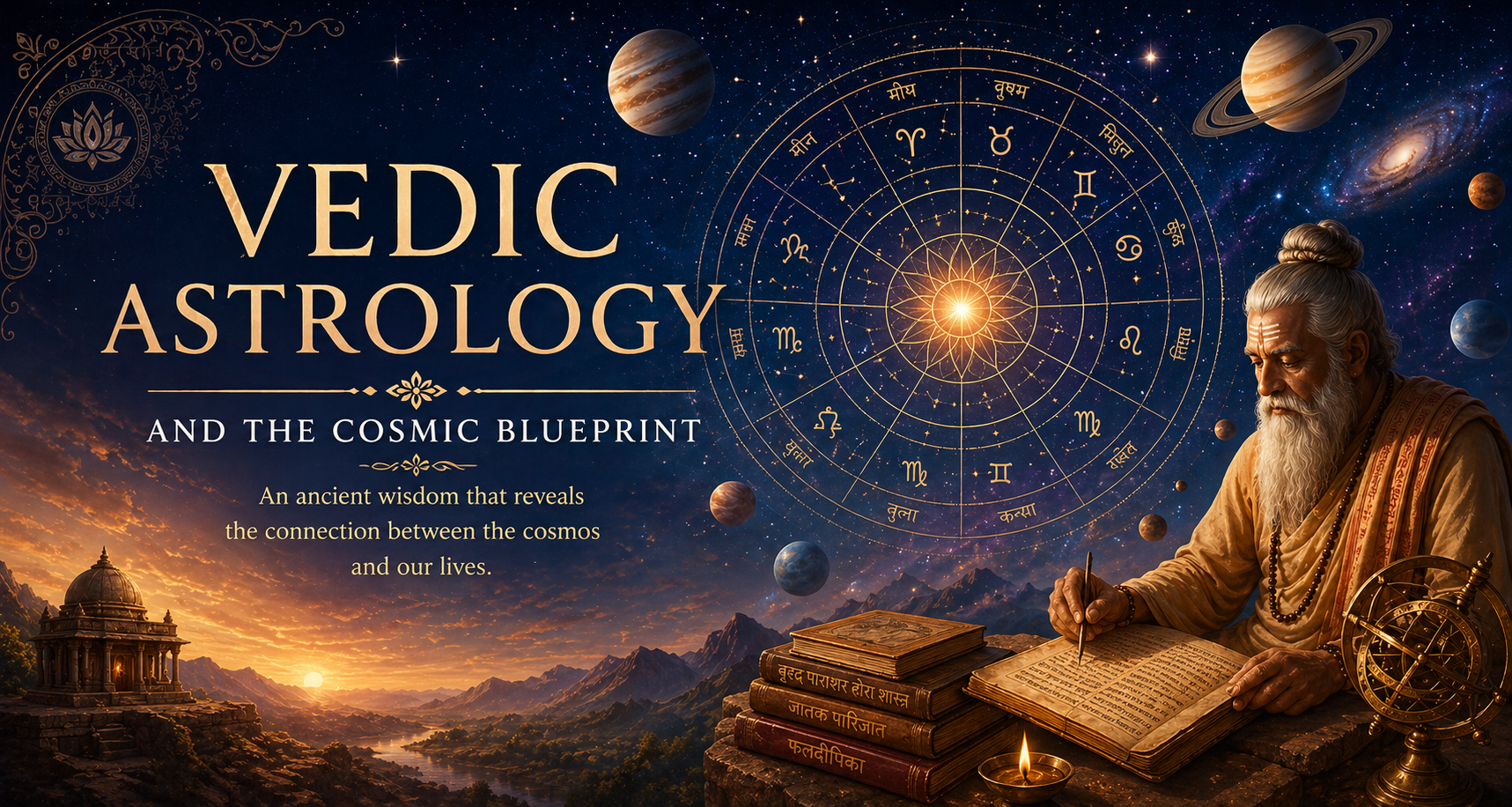
Vedic Astrology, traditionally known as Jyotish (the "Science of Light"), is a spiritual and mathematical system developed in ancient India thousands of years ago. Unlike Western astrology, which often focuses on personality traits, Vedic astrology is a deeply karmic tool. It is designed to illuminate the soul’s path and provide a roadmap for navigating the challenges and opportunities of human life.
Rooted in the Vedas—the oldest sacred scriptures known to humanity—this system views the planets not as remote physical bodies, but as "Grahas" or cosmic forces that seize our consciousness and reflect our past-life actions.
Rooted in the Vedas—the oldest sacred scriptures known to humanity—this system views the planets not as remote physical bodies, but as "Grahas" or cosmic forces that seize our consciousness and reflect our past-life actions.
Sidereal vs. Tropical Zodiac
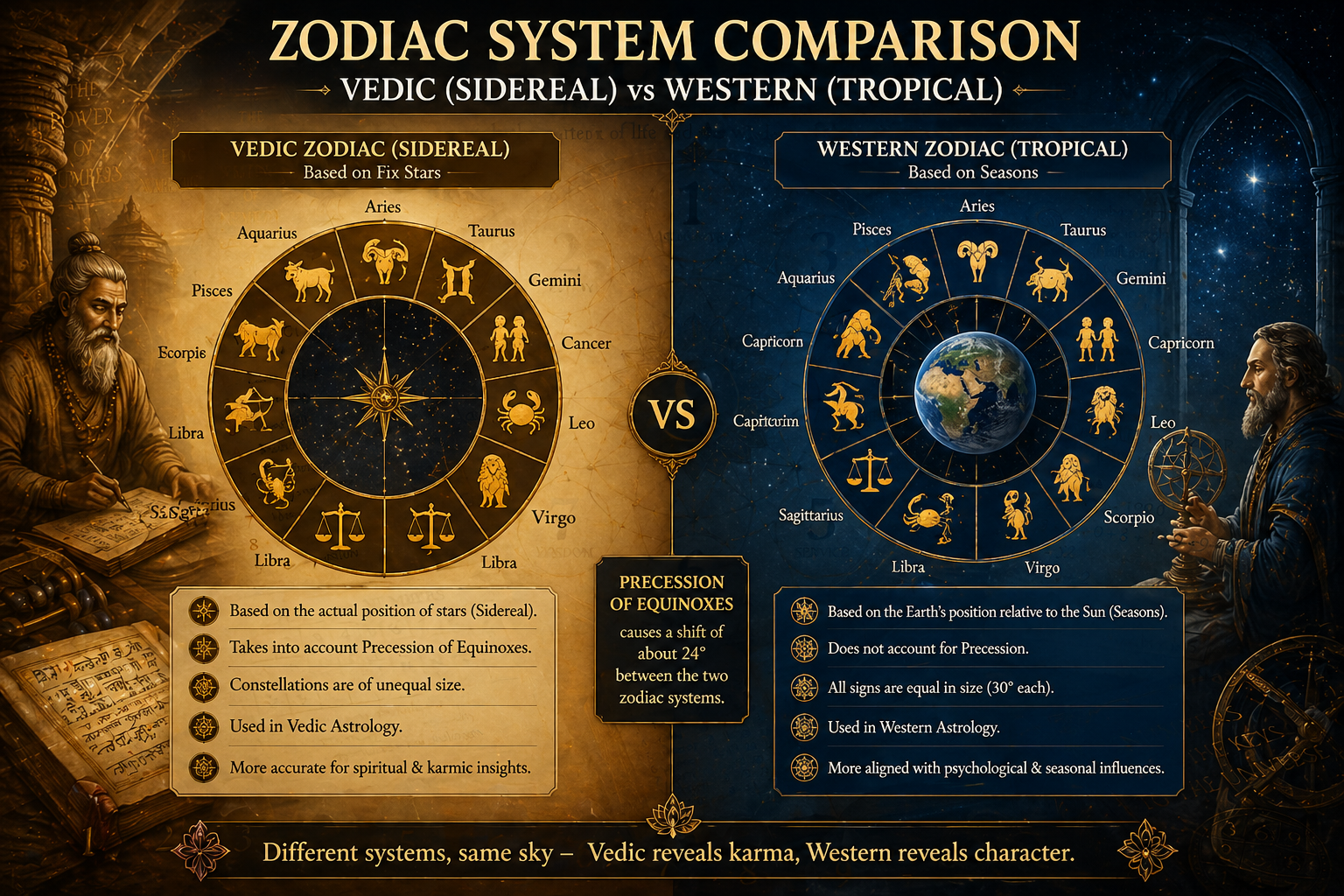
The primary technical difference between Vedic and Western astrology lies in the zodiac they use.
- Tropical Zodiac (Western): Based on the Sun's relationship with the Earth's seasons.
- Sidereal Zodiac (Vedic): Based on the actual, observable positions of the fixed stars in the sky.
The Law of Karma
Vedic astrology is inseparable from the concept of Karma. Your birth chart is considered a visual map of the "Prarabdha Karma"—the specific portion of your soul's history that you have come to resolve in this lifetime.
Through specialized systems like the Chara Karakas (such as the Atmakaraka or soul planet), Jyotish helps identify the core lessons your soul needs to learn. It serves as a spiritual mirror, showing us the "King" of our chart and the primary duty or Dharma we are here to fulfill.
Through specialized systems like the Chara Karakas (such as the Atmakaraka or soul planet), Jyotish helps identify the core lessons your soul needs to learn. It serves as a spiritual mirror, showing us the "King" of our chart and the primary duty or Dharma we are here to fulfill.
The Moon and the Nakshatras
While Western astrology emphasizes the Sun sign, Vedic astrology places paramount importance on the Moon sign and the Nakshatras.
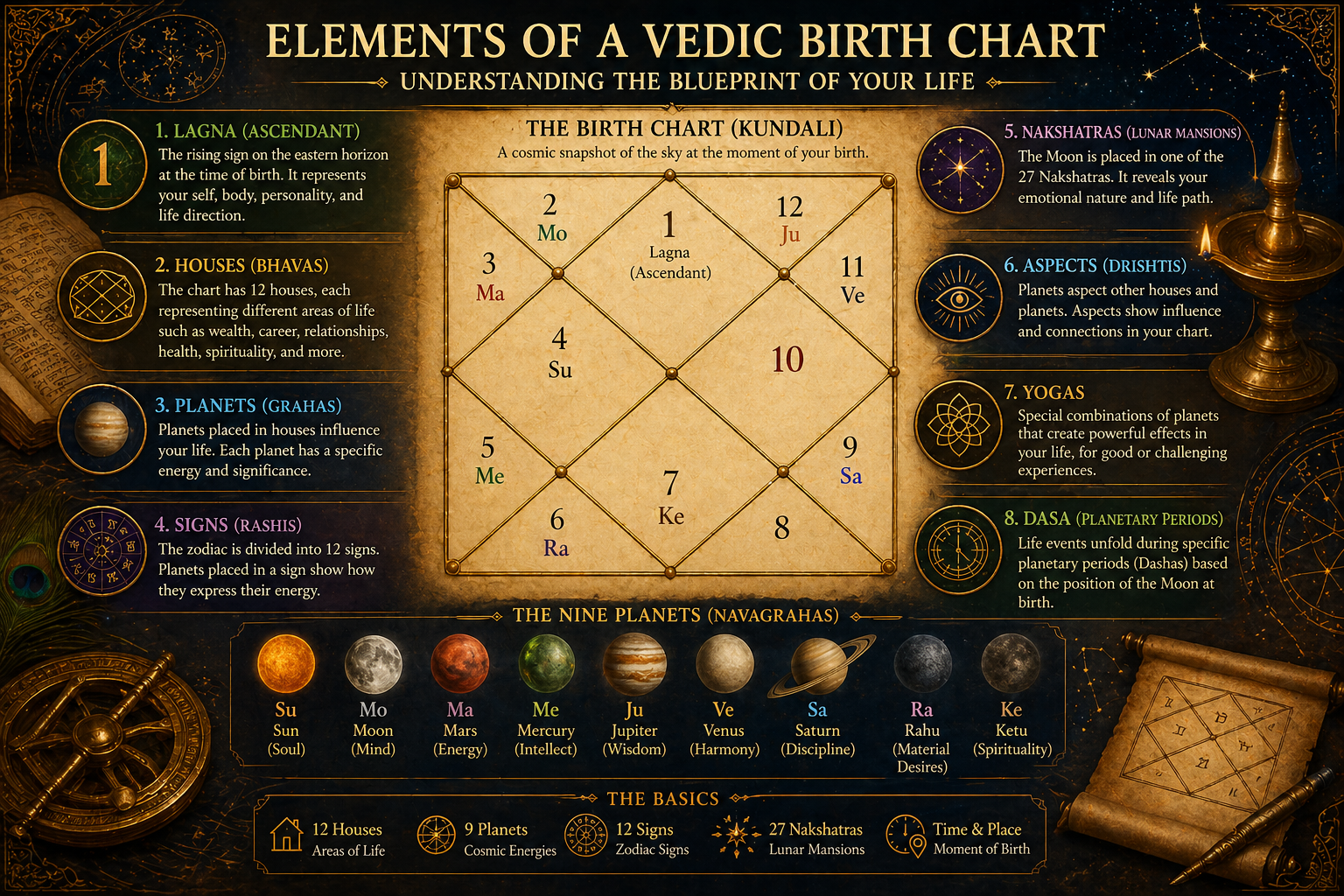
There are 27 Nakshatras (Lunar Mansions) that add an incredible layer of detail to the 12 signs of the zodiac. Each Nakshatra has its own planetary ruler and mythological deity, providing a precise "karmic fingerprint" for an individual's psychology and destiny.
There are 27 Nakshatras (Lunar Mansions) that add an incredible layer of detail to the 12 signs of the zodiac. Each Nakshatra has its own planetary ruler and mythological deity, providing a precise "karmic fingerprint" for an individual's psychology and destiny.
Timing Events: The Dasha System
What makes Vedic astrology uniquely predictive is the Vimshottari Dasha system. This is a sequence of planetary periods that span 120 years.
By looking at your active Dasha, an astrologer can determine which planet is currently "running" your life. This explains why certain years of our lives are defined by career success, while others are focused on relationships, health, or spiritual growth.
By looking at your active Dasha, an astrologer can determine which planet is currently "running" your life. This explains why certain years of our lives are defined by career success, while others are focused on relationships, health, or spiritual growth.
Summary
Vedic astrology is far more than simple fortune-telling. It is a comprehensive framework for self-awareness that integrates planetary science with spiritual law. By understanding the placement of your planets—especially key significators like the Atmakaraka—you gain the clarity needed to align your life with your highest purpose.
Whether you are navigating career changes or seeking the "necessary" partner mirrored in your Darakaraka, Jyotish offers the light required to see the path ahead.
Whether you are navigating career changes or seeking the "necessary" partner mirrored in your Darakaraka, Jyotish offers the light required to see the path ahead.
Explore more Astrology articles