

What is Astrology? The Language of the Stars
Introduction to Astrology
Astrology is the ancient study of how the positions and movements of celestial bodies—the Sun, Moon, and planets—correspond to events and patterns in human life. More than simple fortune-telling, it is a symbolic language that connects the cosmos to our inner world.
The core premise is elegantly simple: the sky at the exact moment of your birth creates a unique "snapshot" called a birth chart (or natal chart). This chart acts as a cosmic blueprint, mapping your personality, strengths, challenges, and life themes.
The core premise is elegantly simple: the sky at the exact moment of your birth creates a unique "snapshot" called a birth chart (or natal chart). This chart acts as a cosmic blueprint, mapping your personality, strengths, challenges, and life themes.
A Brief History
Astrology is one of humanity's oldest knowledge systems, with roots stretching back over 4,000 years to ancient Mesopotamia and Babylon. The Babylonians were the first to map the zodiac, dividing the sky into 12 equal sections tied to the seasons. Their system later flowed into ancient Greece and Rome, shaping the Western astrological tradition we know today.
In parallel, independent systems of astrology developed in India (Vedic/Jyotish), China, and Mesoamerica, each with its own unique methods and worldview.
In parallel, independent systems of astrology developed in India (Vedic/Jyotish), China, and Mesoamerica, each with its own unique methods and worldview.
The Building Blocks: Signs, Houses, and Planets
Every birth chart is built from three core components:
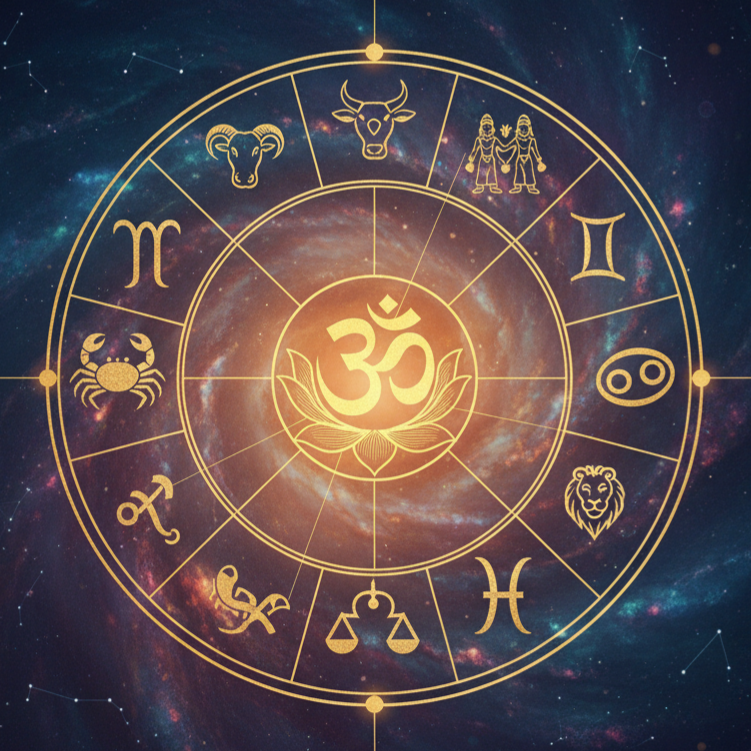
- The 12 Zodiac Signs: Aries, Taurus, Gemini, Cancer, Leo, Virgo, Libra, Scorpio, Sagittarius, Capricorn, Aquarius, and Pisces. Each sign carries specific qualities, elements (Fire, Earth, Air, Water), and modalities.
- The 9 Planets: In Vedic Astrology, nine planetary bodies are considered—Sun, Moon, Mars, Mercury, Jupiter, Venus, Saturn, Rahu, and Ketu. In the Western system, additional outer planets such as Uranus, Neptune, and Pluto are also taken into account, especially for psychological, generational, and transformational influences.
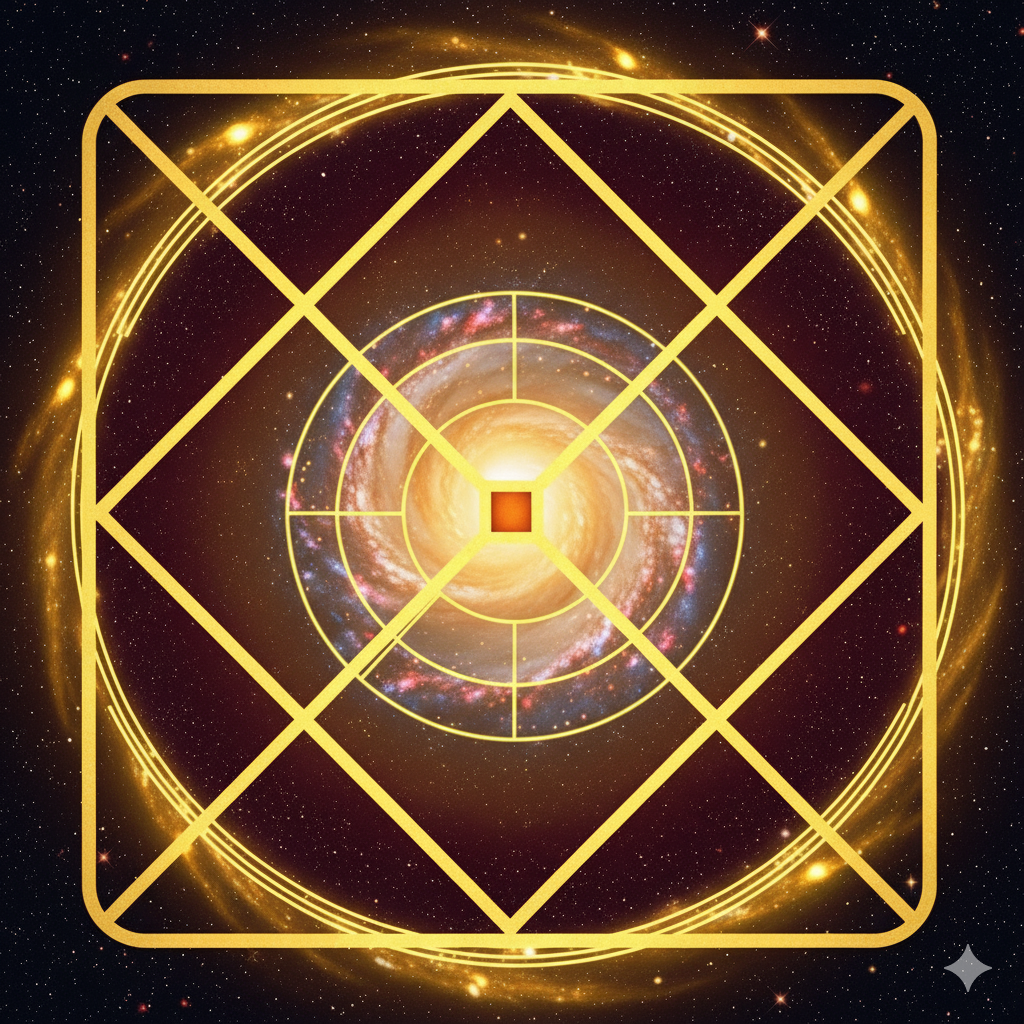
- The 12 Houses: The chart is divided into 12 houses, each representing a distinct area of life: identity, money, communication, home, creativity, health, relationships, transformation, philosophy, career, community, and the subconscious.
Your Sun Sign and Beyond
In the Western world, when someone asks "what's your sign?", they are asking about your Sun sign—the zodiac sign the Sun occupied on your birthday. This is the most publicly familiar part of astrology and forms the basis of most newspaper horoscopes.
However, professional astrology goes far deeper. Your Moon sign reveals your emotional inner world, while your Rising sign (or Ascendant) describes how you appear to others and the lens through which you experience life. Together, these three are called the "Big Three" and form the essential core of your astrological personality.
In contrast, Vedic Astrology (Jyotish) places primary emphasis on the Ascendant (Lagna), the Moon sign, planetary periods (Dashas), and the precise placement of planets in houses and nakshatras. Rather than focusing mainly on the Sun sign, Vedic astrology uses the entire birth chart as the foundation for interpretation and prediction.
However, professional astrology goes far deeper. Your Moon sign reveals your emotional inner world, while your Rising sign (or Ascendant) describes how you appear to others and the lens through which you experience life. Together, these three are called the "Big Three" and form the essential core of your astrological personality.
In contrast, Vedic Astrology (Jyotish) places primary emphasis on the Ascendant (Lagna), the Moon sign, planetary periods (Dashas), and the precise placement of planets in houses and nakshatras. Rather than focusing mainly on the Sun sign, Vedic astrology uses the entire birth chart as the foundation for interpretation and prediction.
What Can Astrology Tell You?
Astrology does not predict a fixed, immovable fate. Rather, it maps tendencies, potentials, and timing. A skilled reading can offer insights into:
In Vedic Astrology (Jyotish), life is viewed through the lens of Karma—the idea that our past actions shape our present experiences and future opportunities. Your birth chart is not seen as a fixed sentence, but as a map of the lessons, strengths, challenges, and tendencies you carry into this lifetime. Rather than predicting unavoidable fate, Vedic astrology aims to help a person understand their karmic patterns, make wiser choices, and grow spiritually through self-awareness and conscious action.
- Core personality traits and blind spots
- Relationship compatibility and dynamics
- Career aptitudes and life purpose
- Recurring life themes and karmic patterns
- Favourable periods for decisions using transits and progressions
In Vedic Astrology (Jyotish), life is viewed through the lens of Karma—the idea that our past actions shape our present experiences and future opportunities. Your birth chart is not seen as a fixed sentence, but as a map of the lessons, strengths, challenges, and tendencies you carry into this lifetime. Rather than predicting unavoidable fate, Vedic astrology aims to help a person understand their karmic patterns, make wiser choices, and grow spiritually through self-awareness and conscious action.
Summary
Astrology is a rich symbolic system that has guided humans for millennia. Whether you approach it as a spiritual tool, a framework for self-reflection, or simply a lens for understanding others, it offers a unique and deeply personal way of making sense of the world.
Ready to go deeper? Explore your astrological sign, discover your rising sign, or dive into Vedic Astrology to see how the ancient Eastern tradition compares.
Ready to go deeper? Explore your astrological sign, discover your rising sign, or dive into Vedic Astrology to see how the ancient Eastern tradition compares.
Explore more Astrology articles