
Diwali 2026: Dates, Puja Muhurat and Significance
Quick Answer
Diwali 2026 (Lakshmi Puja) is on Sunday, 8 November 2026. Dhanteras is on Friday, 6 November 2026; Narak Chaturdashi (Chhoti Diwali) on Sunday, 8 November 2026; Govardhan Puja / Balipratipada on Tuesday, 10 November 2026; and Bhai Dooj on Wednesday, 11 November 2026.
Dates and timings are for India (New Delhi, IST).
Diwali 2026 at a Glance
| Festival | Date | Weekday | Key puja time (IST) |
|---|---|---|---|
| Vasubaras (Govatsa Dwadashi) | 5 November 2026 | Thursday | 5:33 PM - 8:09 PM |
| Dhanteras (Dhanatrayodashi) | 6 November 2026 | Friday | 6:02 PM - 7:58 PM |
| Narak Chaturdashi (Chhoti Diwali) | 8 November 2026 | Sunday | 5:02 AM - 6:38 AM |
| Diwali (Lakshmi Puja) | 8 November 2026 | Sunday | 5:54 PM - 7:50 PM |
| Balipratipada / Govardhan Puja / Padwa | 10 November 2026 | Tuesday | 6:39 AM - 8:49 AM |
| Bhai Dooj (Bhaubij) / Yamadwitiya | 11 November 2026 | Wednesday | 1:09 PM - 3:19 PM |
Diwali 2026: Day-by-Day
Jump to: Vasubaras - 5 November 2026 Dhanteras - 6 November 2026 Narak Chaturdashi - 8 November 2026 Diwali - 8 November 2026 Balipratipada - 10 November 2026 Bhai Dooj - 11 November 2026
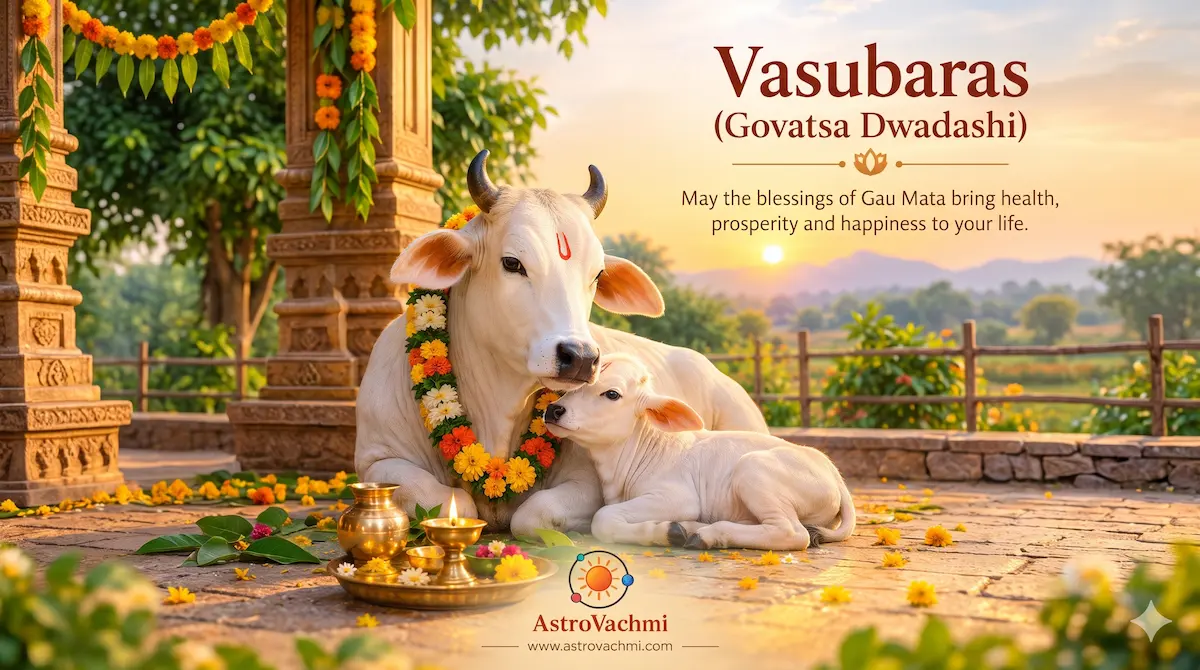
Vasubaras (Govatsa Dwadashi)#
Ashvina Krishna Dwadashi Tithi 5 November 2026 (Thursday)
Vasubaras opens the Diwali cluster with the worship of cows and calves, honouring them as symbols of prosperity and maternal care. Many households avoid milk and milk products from the family cow on this day as a mark of respect.
Muhurat
Timings are calculated for New Delhi (IST). For other cities they shift by a few minutes to an hour - check your local Panchang before the puja.
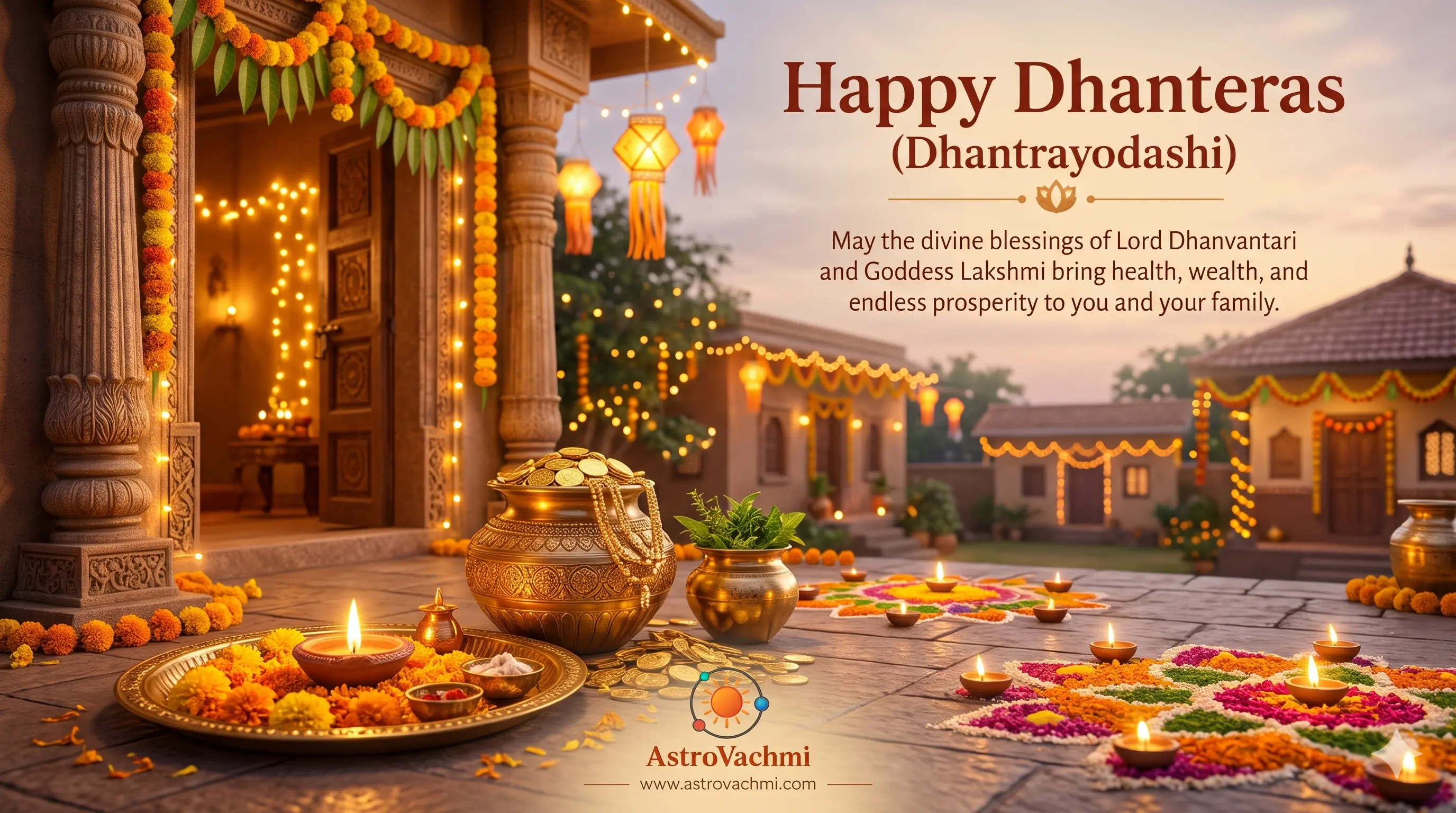
Dhanteras (Dhanatrayodashi)#
Ashvina Krishna Trayodashi Tithi 6 November 2026 (Friday)
Dhanteras marks the appearance of Dhanvantari, the god of health and healing, and is dedicated to Goddess Lakshmi as the bringer of wealth. It is traditionally auspicious to buy gold, silver or new utensils on this day, and homes are cleaned and lit in preparation for Diwali.
Muhurat
Timings are calculated for New Delhi (IST). For other cities they shift by a few minutes to an hour - check your local Panchang before the puja.
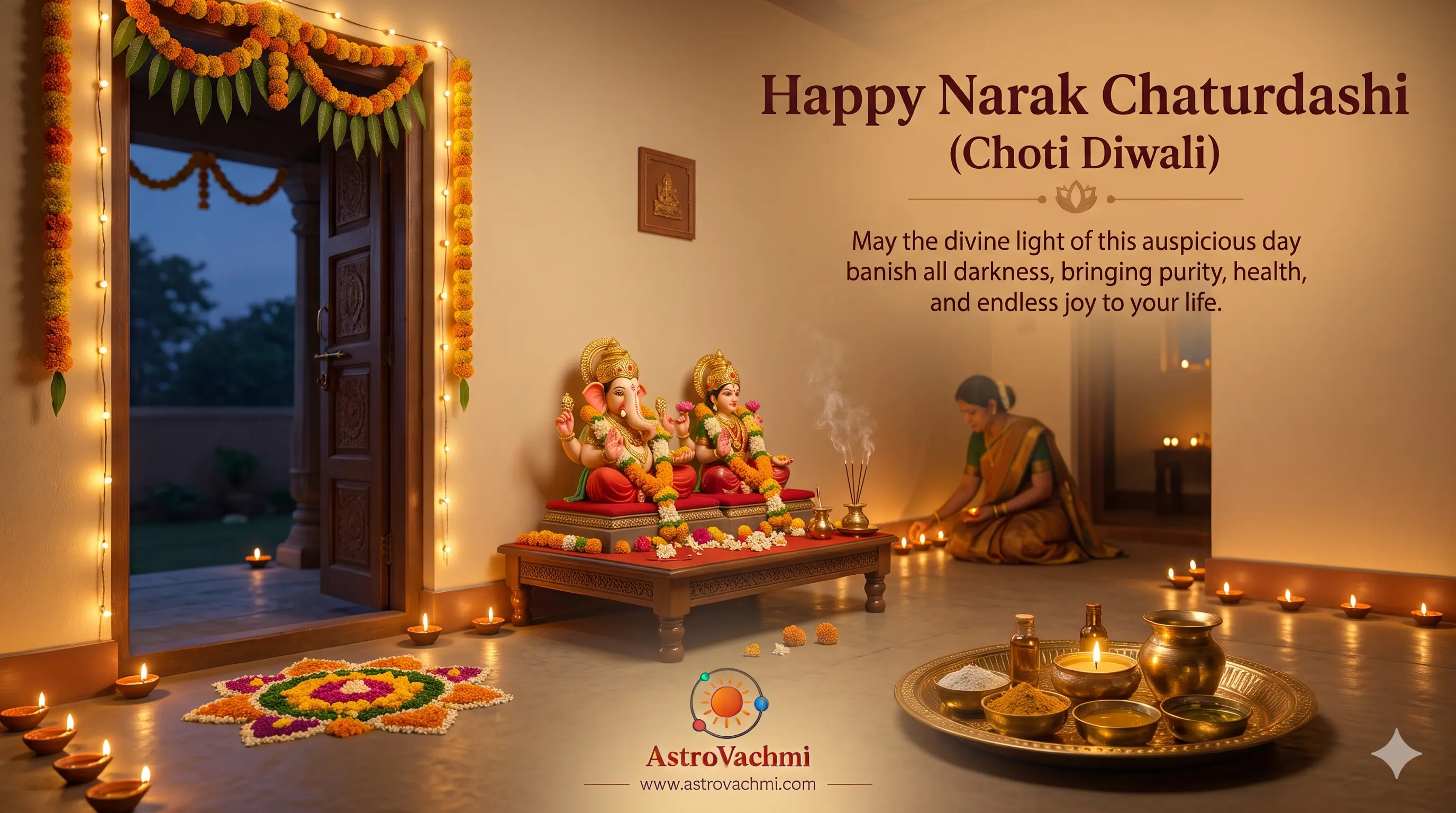
Narak Chaturdashi (Chhoti Diwali)#
Ashvina Krishna Chaturdashi Tithi 8 November 2026 (Sunday)
Narak Chaturdashi commemorates Lord Krishna's victory over the demon Narakasura. The day begins with an Abhyanga Snan (a ritual oil bath before sunrise) to cleanse away negativity, which is why this observance follows the sunrise-tithi rule rather than an evening one.
Muhurat
Timings are calculated for New Delhi (IST). For other cities they shift by a few minutes to an hour - check your local Panchang before the puja.
Diwali (Lakshmi Puja)#
Ashvina Amavasya Tithi 8 November 2026 (Sunday)
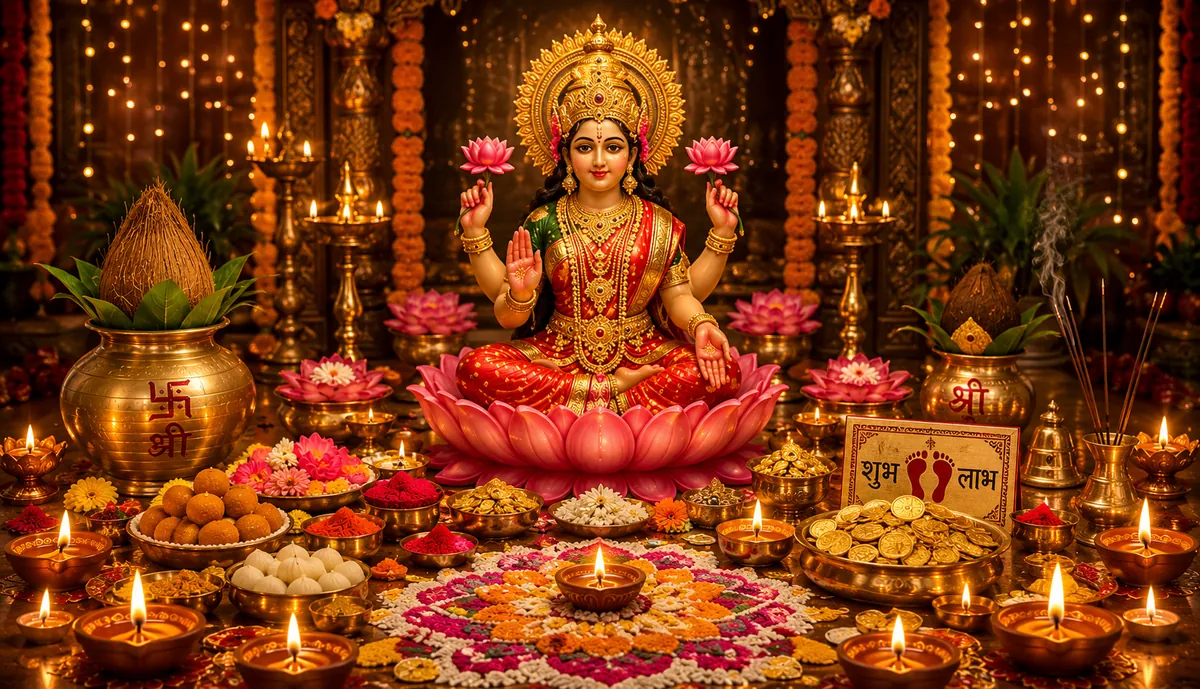
The main day of Diwali, dedicated to Lakshmi Puja - inviting Goddess Lakshmi into the home for prosperity and wellbeing in the year ahead. Because the puja is performed after sunset, the correct date is the day whose evening (Pradosh Kaal) falls within Amavasya tithi - not necessarily the day whose sunrise does.
Muhurat
Timings are calculated for New Delhi (IST). For other cities they shift by a few minutes to an hour - check your local Panchang before the puja.
Balipratipada / Govardhan Puja / Padwa#
Kartika Shukla Pratipada Tithi 10 November 2026 (Tuesday)
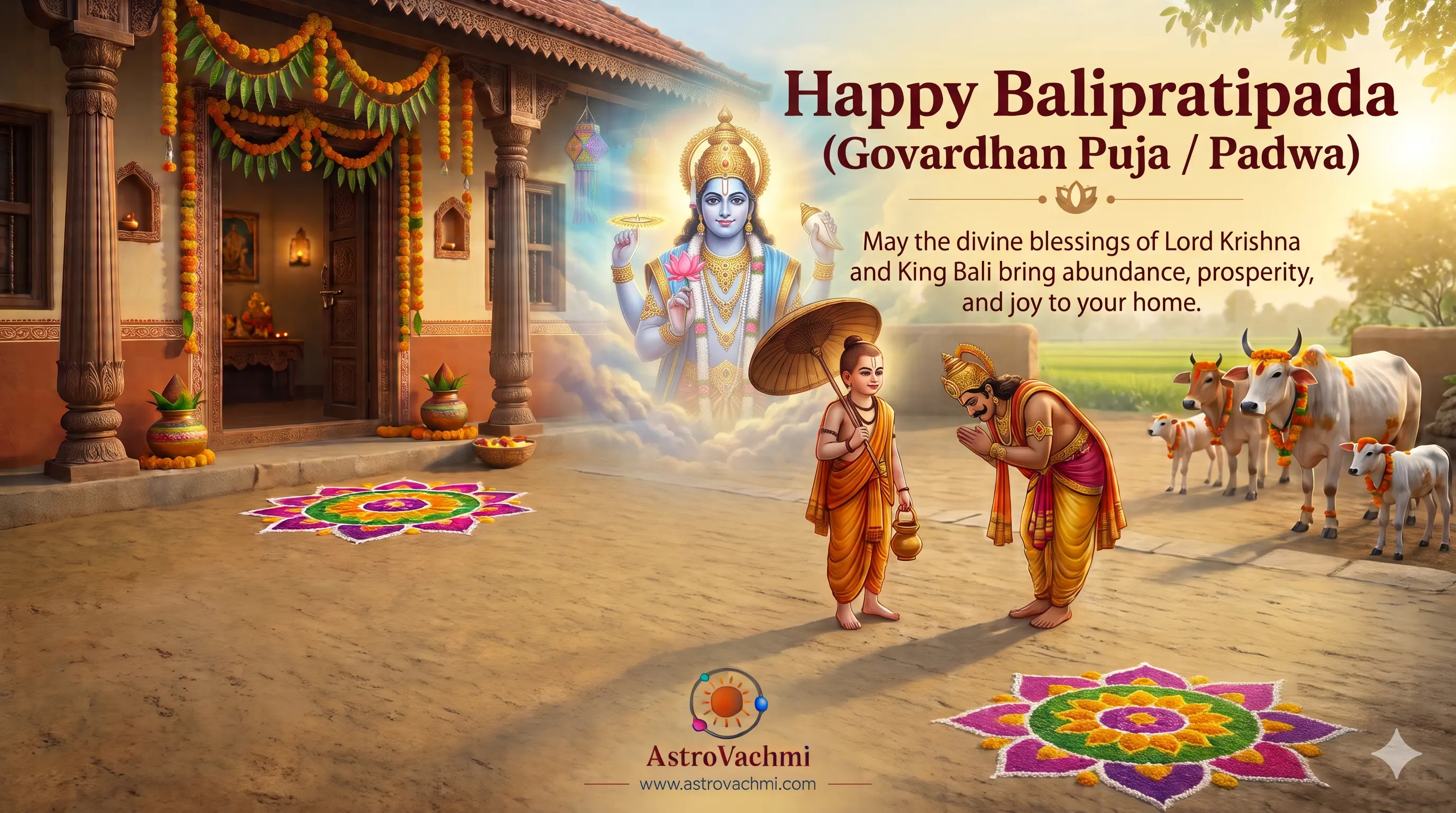
This day marks King Bali's symbolic return to earth and, in North India, commemorates Lord Krishna lifting Govardhan Hill to shelter the villagers of Vraj. It is also the start of the new business year for many trading communities, marked with account-book (Chopda) worship.
Muhurat
Timings are calculated for New Delhi (IST). For other cities they shift by a few minutes to an hour - check your local Panchang before the puja.
Bhai Dooj (Bhaubij) / Yamadwitiya#
Kartika Shukla Dwitiya Tithi 11 November 2026 (Wednesday)
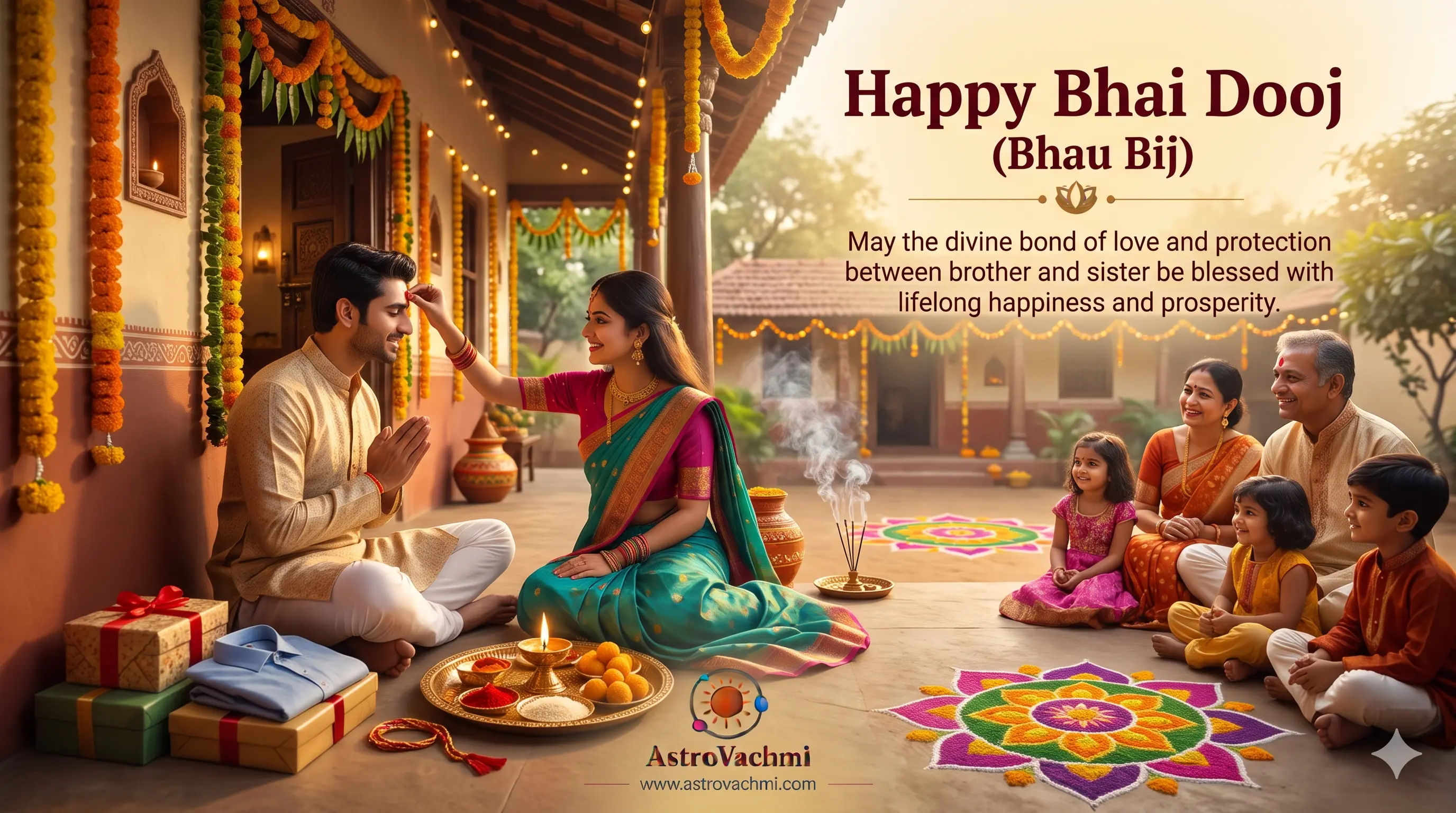
The closing day of the Diwali cluster celebrates the bond between brothers and sisters - sisters perform an Aarti for their brothers and apply a tilak, praying for their wellbeing, in a ritual echoing Yama and Yamuna's mythological reunion.
Muhurat
Timings are calculated for New Delhi (IST). For other cities they shift by a few minutes to an hour - check your local Panchang before the puja.
Lakshmi Puja Vidhi (Step by Step)
A simple household vidhi followed on Diwali evening during the Pradosh Kaal. Customs vary by family and region; follow your own tradition where it differs.
Samagri (what you need): Idols or pictures of Lakshmi, Ganesha and Kubera; kalash with water, mango leaves and a coconut; red cloth; rice (akshat), turmeric, kumkum and sandalwood paste; flowers (lotus if possible); incense, ghee diyas and camphor; sweets, fruit, betel leaves and nuts; coins, jewellery or account books.
- Clean and decorate the home, draw a rangoli at the entrance and light diyas. Bathe and wear fresh clothes before the puja.
- Set up the altar on a clean platform with red cloth. Place Lakshmi and Ganesha (Lakshmi to Ganesha's right) and install the kalash with a coconut on mango leaves.
- Take a sankalp: with water in hand, state your name, the date and your intention to perform Lakshmi Puja for prosperity and wellbeing.
- Worship Ganesha first with flowers, akshat, durva and a diya, so that the puja proceeds without obstacles.
- Invoke Goddess Lakshmi. Offer water, then panchamrit, then fresh water again; apply kumkum and turmeric and offer flowers, garlands and fresh clothes or a cloth.
- Chant the Lakshmi mantras or the Shri Suktam, for example 'Om Shreem Mahalakshmyai Namah', and offer coins, jewellery or account books for worship.
- Offer naivedya (sweets, fruit, betel leaf, nuts), then perform the aarti with a ghee diya and camphor and ring the bell.
- Distribute prasad to the family, light diyas in every room, at the entrance and the courtyard, and keep a lamp burning through the night.
Diwali Traditions Across India
North India
Diwali commemorates Lord Rama's return to Ayodhya. Homes are lit with diyas, Lakshmi-Ganesha puja is performed in the evening, and families gather for sweets, cards and fireworks. Govardhan Puja with annakut follows the next day.
Maharashtra
Celebrations begin with Vasubaras, when cows and calves are worshipped. Narak Chaturdashi starts with the early Abhyanga Snan, followed by faral (fried snacks and sweets). Lakshmi Puja is performed in the evening, a central part of the festival. Balipratipada (Padwa) is celebrated with wives performing aarti for their husbands, and Bhaubij ends the festival. Diwali is celebrated not just with lights but also with firecrackers and sweets.
Gujarat and Rajasthan
Chopda Pujan - worship of new account books - is central on Lakshmi Puja evening. The day after Diwali is the Gujarati New Year (Bestu Varas), when families visit each other to exchange greetings.
Bengal, Odisha and Assam
The Amavasya night is dedicated to Goddess Kali (Kali Puja) rather than Lakshmi, with night-long worship. Lamps are also lit to guide the souls of ancestors on the Amavasya night.
South India
Diwali is celebrated as Naraka Chaturdashi with an early morning oil bath, new clothes and sweets, often marked by the pre-dawn Ganga Snanam ritual. Lamps are lit in rows and homes are decorated with kolam.
The Astrology of Diwali 2026
Sun in Libra
Diwali always falls while the Sun transits Libra (Tula), the sign of its debilitation, from 17 October to 16 November in 2026. On the Amavasya of Lakshmi Puja the Sun and Moon meet in Libra, a sign ruled by Venus, the planet of wealth and comfort. The festival of lights is traditionally read as kindling light at a time when the Sun is at its weakest.
Jupiter enters Leo
Jupiter, the natural significator of wealth, wisdom and blessings, enters Leo on 31 October 2026, just before Dhanteras and Diwali. Leo is ruled by the Sun, a friend of Jupiter, so the new Jupiter cycle is widely seen as supportive of confidence, leadership, learning and children. Ketu is already in Leo until 5 December, which adds a note of detachment to desires for recognition.
Mars enters Leo
Mars follows into Leo on 12 November 2026, a few days after Diwali, bringing energy and drive to the same sign. Jupiter, Ketu and Mars together in Leo make the weeks after Diwali good for disciplined action on long-term plans, but a time to avoid ego-driven or impulsive decisions.
Read the full guide: Jupiter, Ketu and Mars in Leo - effects on every sign →
This is traditional interpretation for general reading; for personal effects, look at your own birth chart.